Garhwali
ना जा ना जा तौं भेलू पखाण
जिदेरी घसेरी बोल्यूं मान
ना जा ना जा तौं भेलू पखाण
जिदेरी घसेरी बोल्यूं मान
औण नि देन्दी तू सरकारी बोण
गौर भैंस्यूं मिन क्या खलौण
औण नि देन्दी तू सरकारी बोण
गौर भैंस्यूं मिन क्या खलौण
ना जा ना जा ना जा हे ना जा
ना जा ना जा तौं भेलू पखाण
जिदेरी घसेरी बोल्यूं मान
तेरी भों मि पतरोल कखी भि जौऊँ
तू ड्यूटी समांल जंगल बचौऊं
तेरी भों मीं पतरोल कखी भी जोंऊँ
तू ड्यूटी समांल जंगल बचौऊं
भेल उन्द पोडु मीं डाल उन्द मोरू चा
जंगल चोरु मिन घास ली जांण
गौरू भैंस्यूं थें क्या खलौण
ना जा ना जा तौं भेलू पखाण
जिदेरी घसेरी बोल्यूं मान
औण नि देन्दी तू सरकारी बोण
गौर भैंस्यूं मिन क्या खलौंण
गुन्दक्याली खुट्टी तेरि खस्स रैड़ीली
पट्ट मोरि जेलि भेल उन्द पोड़ीली
गुन्दक्याली खुट्टी तेरि खस्स रैड़ीली
पट्ट मोरि जेलि भेल उन्द पोड़ीली
तेरि दाथी चदीरिल गौर-बछूरूल
सासु ससुरोंल खौलयूं रै जाण
जिदेरी घसेरी बोल्यूं मान
औण नि देन्दी तू सरकारी बोण
गौर भैंस्यूं मिन क्या खलौण
ना जा ना जा ना जा हे ना जा
ना जा ना जा तौं भेलू पखाण
जिदेरी घसेरी बोल्यूं मान
बण भी सरकारी तेरो मन भी सरकारी
तिन क्या समझण हम लोगु कि खैरी
बण भी सरकारी तेरो मन भी सरकारी
तिन क्या समझण हम लोगु कि खैरी
जब बण जौला लाखुड़ घास ल्योंला
और भैंसी पिजोला तब चुल्लू जगौण
नौनु न निथर भुखि सेजांण
ना जा ना जा तौं भेलू पखाण
जिदेरी घसेरी बोल्यूं मान
औण नि देन्दी तू सरकारी बोण
गौर भैंस्यूं मिन क्या खलौण
पाड़ै बेटी ब्वार्यू कू बण ही च सारु
जणदु छौं मी भी पर क्याजि कारू
पाड़ै बेटी ब्वार्यू कू बण ही च सारु
जणदु छौं मी भी पर क्याजि कारू
दया जु आली साबन सुण्याली
त नौकरी जाली मेरी छुट्टी ह्वै जांण
बाल-बच्चों मिन क्या खलाण
औण नि देन्दी तू सरकारी बोण
गौर भैंस्यूं मिन क्या खलौण
ना जा ना जा ना जा हे ना जा
ना जा ना जा तौं भेलू पखाण
जिदेरी घसेरी बोल्यूं मान
औण नि देन्दी तू सरकारी बोण
गौर भैंस्यूं मिन क्या खलौण
जिदेरी घसेरी बोल्यूं मान
गौर भैंस्यूं मिन क्या खलौण
जिदेरी घसेरी बोल्यूं मान
गौर भैंस्यूं मिन क्या खलौण
English
O stubborn ghasyari, listen to me —
don't go to those deep gorges and steep mountains.
You won't let me into this government forest,
then what will I feed my cows and buffaloes?
O patrolman, wherever I go, what is it to you?
Do your duty, guard your forest —
but stay out of my way.
If I fall into the gorge, if I die on a tree,
even if I have to steal the whole forest —
I will take my grass home.
But if your delicate feet slip,
if you fall into that gorge and never come back —
what will become of your sickle, your shawl?
Your cows, your calves, your in-laws?
O stubborn ghasyari, just listen to me.
The forest belongs to the government now,
and so does your heart, it seems.
What would you know of our hardships?
Only when we go to the forest can we bring back grass and firewood,
only then can we milk the buffalo,
only then can we light the hearth —
otherwise my children will sleep hungry.
I understand this well —
the forest is the only lifeline
for every daughter and bride of these mountains.
But there is nothing I can do.
If I show kindness and someone finds out,
I will lose my job forever —
and then how will I feed my own children?
Hindi
जिद्दी घसेरी मेरा कहना मान तू इन गहरी खाईयों और पहाड़ों पर मत जा।
तू इस सरकारी जंगल मे मुझे आने नहीं देता, मैं अपनी गाय, भैंसों को क्या खिलाऊंगी?
अरे पतरोल मैं कहीं भी जाऊँ उससे तुझे क्या लेना देना,
तू अपनी ड्यूटी संभाल और बस जंगल बचा।
मैं चाहे खाई मे गिरु या पेड़ पर ही मर जाऊँ भले ही मुझे पूरा जंगल चुराना पड़ जाए मैं घास ले जाकर ही रहूँगी।
तेरे नाजुक पैर अगर फिसल गए तो कहीं तू खाई मे गिरकर मर ना जाए,
तब तेरी दराती,चदरी,गाय, बछरे, सास-ससूर का क्या हार होगा।
जिद्दी घसेरी मेरा कहना मान।
जंगल भी सरकार का हो गया है और तेरा मन भी सरकार का हो गया है, तू हम लोगों की परेशानियों को क्या ही समझेगा,
जब हम जंगल जाएंगे तभी घास-लकड़ियाँ भी लापाएंगे और तब ही हम भैंस का दूध निकाल पाएंगे और चूल्हा भी तब ही जला पाएंगे वरना मेरे बच्चे भूखे ही सो जाएंगे।
मैं इस बात को अच्छे से समझता हूँ कि पहाड़ की बेटी बहुओं का एक मात्र सहारा जंगल ही है , पर मैं चाह कर भी कुछ नहीं कर सकता ।
अगर मैंने दया दिखाई और किसी ने सुन लिया तो मेरी नौकरी चली जाएगी और मेरी हमेशा के लिए छुट्टी हो जाएगी फिर मैं अपने बच्चे कैसे पालुगां।
Pahadi Glossary
Words That Cannot Be Translated
Some Pahadi words carry meanings that no single English or Hindi word can capture. Here are the key terms from this song.
Ghasyari
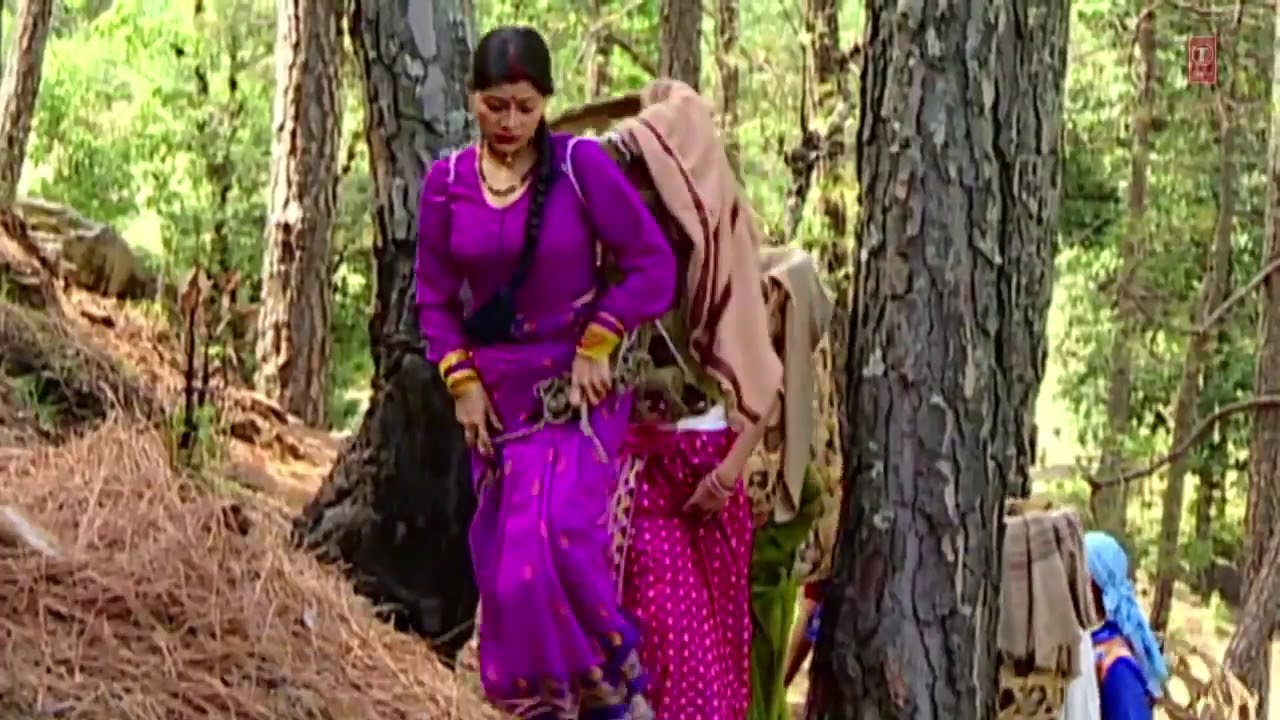
Women who cut and collect grass for cattle
patrol
A forest Guard
Jidyeri Ghasyari
This song (geet) very powerfully and emotionally depicts the real-life conflict that exists in the Himalayan regions, especially in Uttarakhand. What the song highlights: Daily dependence on nature: For mountain women (and families), the forest is not just a resource — it is their lifeline. They depend on it for grass (for livestock), firewood, herbs, and fodder. Without access to the jungle, their cows and buffaloes cannot be fed, milk production stops, the hearth (chulha) cannot be lit, and children go hungry. This is the ground reality of many villages even today. Conflict with government laws: After independence, especially after the Forest Conservation Act and other strict forest laws, large parts of the forests were declared "Reserved Forests" or "Government Forests." Local people who had been using these areas for generations suddenly found themselves labeled as encroachers or thieves. The forest guard (patrol/pahredar) is shown not as a villain, but as a helpless employee caught between duty and compassion. Snatching of traditional rights: The song clearly shows how the rights over Jal, Jungle, Zameen (water, forest, land) — which local mountain communities had enjoyed for centuries under traditional customs — were gradually taken away by the state machinery. People now need permission even to collect dry grass or wood. If they get caught, they face fines or legal action.